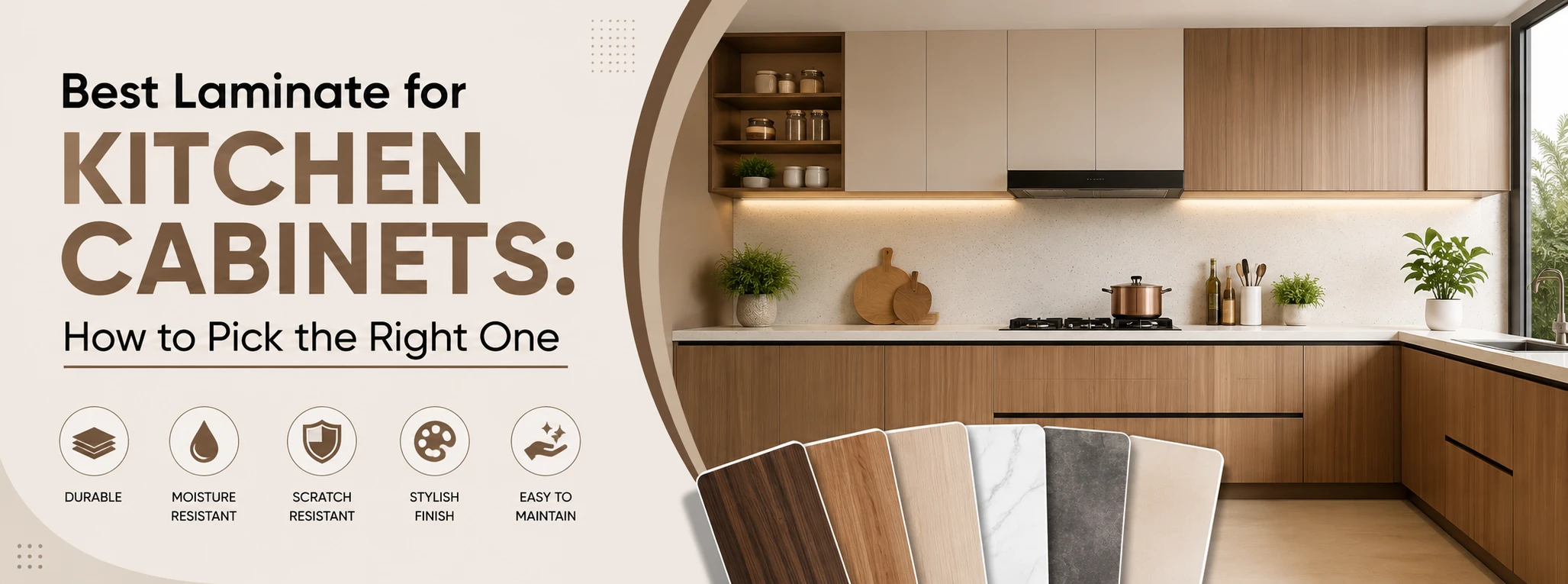
Best Laminate for Kitchen Cabinets: How to Pick the Right One
Choosing the best laminate for kitchen cabinets sounds simple—until you start comparing matte, glossy, wood-finish, textured and anti-fingerprint options. Each finish has its own advantages, and the right choice depends on how you use your kitchen, the look you want and how much maintenance you are comfortable with.
Quick Answer: Which Laminate Is Best for Kitchen Cabinets?
For most everyday kitchens, a good-quality high-pressure laminate (HPL) is a practical starting point. If your kitchen is used heavily, a matte or anti-fingerprint finish can be particularly convenient because everyday fingerprints and minor marks may be less noticeable.
However, there is no single laminate that is automatically the best for every kitchen. The right choice depends on the cabinet application, product specifications, finish, kitchen usage, maintenance expectations, budget and installation quality.
What Is Laminate for Kitchen Cabinets?
Laminate is a decorative surface material applied over a suitable cabinet substrate, such as plywood or another engineered board. It gives cabinet shutters their visible colour, pattern and finish while providing a surface designed for everyday use.
But laminate is only one part of the cabinet. The final result also depends on the board underneath, adhesive, edge finishing, cabinet construction and installation quality.
That is why choosing the cheapest or most attractive sheet is not necessarily the best approach. You want the complete cabinet system to work well together.
Which Laminate Is Best for Kitchen Cabinets?
There is no single laminate that is perfect for every kitchen. A family kitchen that sees several hours of cooking each day has different needs from a lightly used kitchen.
As a starting point, look for a laminate that gives you the right balance of durability, maintenance, moisture performance, appearance and price. Always check the manufacturer’s specifications and recommended application before making a final selection.
| Your Priority | A Suitable Option |
|---|---|
| Everyday practicality | Good-quality HPL |
| Easy-looking maintenance | Smooth matte laminate |
| Fewer visible fingerprints | Matte or anti-fingerprint laminate |
| Bright, modern appearance | Gloss laminate |
| Natural appearance | Wood-finish laminate |
| Visual texture | Textured laminate |
| Busy family kitchen | Durable, easy-clean laminate |
For a detailed comparison of popular kitchen cabinet finishes, read our guide to glossy vs matte laminate for kitchen cabinets.
Types of Laminate for Kitchen Cabinets
Kitchen cabinet laminates are available in different types, finishes and surface textures, making it easier to choose an option based on your kitchen’s style, usage and maintenance requirements.
Some common types of laminate for kitchen cabinets include:
- High-Pressure Laminate (HPL): A practical option for everyday kitchen cabinetry, available in a wide range of colours, patterns and finishes.
- Matte Laminate: A non-reflective finish that gives cabinets a soft, contemporary appearance and generally makes fingerprints less noticeable.
- Gloss Laminate: A reflective finish that can create a bright, sleek appearance and work particularly well in modern kitchens.
- Anti-Fingerprint Laminate: Designed to make everyday fingerprints and smudges less noticeable, making it useful for frequently touched cabinet shutters.
- Wood-Finish Laminate: Designed to recreate the appearance of natural wood while offering consistent colours, patterns and easier design coordination.
- Textured Laminate: Features a tactile surface that can add depth and character to kitchen cabinets, including wood-grain and other decorative effects.
The best type depends on how you use your kitchen, how much maintenance you are comfortable with and the overall appearance you want to create.
If you want to explore different decorative styles in more detail, see our guide to top decorative laminates for kitchen cabinets.
Matte Laminate: A Practical Choice for Busy Kitchens
Matte laminate has a soft, non-reflective appearance. It gives the kitchen a calm and contemporary feel without making the cabinets overly shiny.
One of its biggest practical advantages is everyday appearance. Fingerprints and small marks are generally less noticeable than they are on some highly reflective surfaces.
If you want cabinets that look refined without requiring constant wiping, a smooth matte laminate is a strong option.
Popular Matte Colours
- Warm white
- Beige
- Light grey
- Olive green
- Taupe
- Charcoal
- Soft brown
Glossy Laminate: When Should You Choose It?
Gloss laminate is a popular choice for modern kitchens because its reflective surface can make the room feel brighter.
It can work particularly well in compact kitchens where you want the cabinets to reflect more available light.
The trade-off is maintenance appearance. Fingerprints, smudges, water marks and certain scratches can be easier to notice on a glossy surface, particularly with darker colours.
Gloss Laminate Works Well When
- You want a modern appearance.
- Your kitchen is relatively compact.
- You like reflective surfaces.
- You do not mind regular wiping.
- You want to combine gloss with matte or wood finishes.
Matte vs Glossy Laminate: Which Is Better?
Neither finish is automatically better. The right choice depends on what matters most to you.
If you are comparing these two popular finishes, explore our detailed guide on glossy vs matte laminate for kitchen cabinets.
| Feature | Matte | Glossy |
|---|---|---|
| Appearance | Soft and sophisticated | Bright and reflective |
| Fingerprints | Generally less noticeable | Generally more noticeable |
| Maintenance appearance | Minor marks may be less visible | Smudges may be more visible |
| Small kitchens | Works well with suitable colours and lighting | Can enhance brightness through reflection |
| Busy kitchens | Very practical | Good with regular cleaning |
If practicality is your priority, matte is usually the easier choice. If you want shine and a brighter visual effect, glossy laminate may be a better match.
Anti-Fingerprint Laminate: Is It Worth It?
If you have a handleless kitchen or frequently touch the cabinet shutters, anti-fingerprint laminate can be worth considering.
This type of surface is designed to reduce the visibility of everyday fingerprints and smudges. It can be especially useful for darker cabinet colours, where marks may otherwise be more noticeable.
Regular cleaning is still necessary, but the main benefit is simple: anti-fingerprint surfaces can help reduce the visibility of everyday marks and keep your cabinets looking cleaner between wipe-downs.
Always check the manufacturer’s specifications because the performance of anti-fingerprint surfaces can vary by product.
Wood-Finish Laminate for a Warm Kitchen
If you like the warmth of wood but do not want natural timber throughout the kitchen, wood-finish laminate is worth considering.
Wood-inspired finishes can create a warm appearance while giving you more consistency in colour and pattern. They can also be combined with solid-colour laminates to create contrast.
Popular Wood-Finish Combinations
- White and oak
- Cream and walnut
- Light grey and natural wood
- Green and oak
- Beige and dark wood
Textured Laminate: Beautiful but Consider Maintenance
Textured laminates add depth and character to cabinet doors. They can imitate wood grain, stone and other materials.
However, very deep textures can collect dust and grease more easily than smooth surfaces.
If your kitchen involves a lot of frying or heavy cooking, a subtle texture may offer a better balance between appearance and maintenance.
What About Waterproof Laminate for Kitchen Cabinets?
This is an important point because the term “waterproof laminate” can create unrealistic expectations.
Laminate can provide a moisture-resistant decorative surface, but it does not automatically make the complete cabinet waterproof.
Water can still reach the underlying material through exposed edges, joints, damaged areas or poor installation.
Practical tip: Cabinets around the sink deserve extra attention. Ask your kitchen contractor how the edges, joints and moisture-prone areas will be protected before you finalise the laminate.
What Is the Best Laminate for an Indian Kitchen?
Indian kitchens can be demanding. Regular cooking can mean exposure to steam, oil, spices, heat and frequent cleaning.
For many households, a practical combination is:
Good-quality laminate + an easy-maintenance finish + properly constructed cabinets.
HPL is a commonly used option for kitchen cabinetry, while matte and anti-fingerprint finishes can be particularly convenient for kitchens that see heavy daily use.
Rather than choosing a laminate simply because it is marketed as suitable for an Indian kitchen, check the actual product specifications and intended application.
For more information specifically focused on Indian cooking conditions, read our guide to the best laminates for Indian kitchens.
Does Laminate Need to Be Heat Resistant?
Kitchen cabinets can be exposed to heat, particularly when they are positioned close to cooking appliances.
Before choosing a laminate for an area exposed to higher temperatures, check the manufacturer’s technical specifications and installation recommendations.
Also remember that laminate is not a substitute for safe clearances and proper installation around cooking appliances.
How to Choose the Right Laminate Colour
Colour can completely change how your kitchen feels. But do not choose a laminate only because it looks good in a showroom.
Think about your:
- Kitchen size
- Natural light
- Countertop
- Flooring
- Wall colour
- Appliances
- Cleaning habits
- Overall interior style
Best Laminate Colours for a Small Kitchen
Lighter shades can help create a brighter appearance.
- White
- Ivory
- Cream
- Light grey
- Beige
- Light wood
Best Laminate Colours for a Large Kitchen
You can experiment more freely with darker colours when the kitchen has sufficient lighting.
- Charcoal
- Deep green
- Navy
- Walnut
- Dark brown
- Black
Timeless Laminate Colour Combinations
Neutral combinations are usually easier to live with long term. Warm white with oak, cream with walnut, and light grey with natural wood are simple combinations that can work across different interior styles.
Should You Choose Dark or Light Laminate?
Both can look excellent. The difference is how they behave visually in everyday use.
Light colours can make a space feel brighter and more open, while darker colours can create a sophisticated and dramatic look.
If you choose a dark colour for frequently touched cabinets, an anti-fingerprint or practical matte finish can be worth considering.
Laminate vs Acrylic for Kitchen Cabinets
Acrylic is known for its smooth, high-gloss appearance and is often chosen for modern kitchens.
Laminate offers a broader range of finishes, including matte, wood-finish, textured and glossy options.
Choose Laminate If You Want
- More finish choices
- A practical everyday surface
- Design flexibility
- A range of price points
- Matte, textured or wood-look options
Consider Acrylic If
- You specifically want a high-gloss appearance.
- You like a sleek, reflective finish.
- The visual effect is your main priority.
Neither material is universally better. The right choice depends on your design, maintenance expectations, budget and product specifications.
Laminate vs Veneer for Kitchen Cabinets
Veneer is a thin layer of real wood, while laminate is a manufactured decorative surface.
Veneer is attractive if you want genuine wood character and natural variation. Laminate can be a better fit if you want a consistent appearance and a wider selection of colours and finishes.
What Thickness of Laminate Is Best?
You may hear that a particular laminate thickness is automatically “the best.” In reality, thickness is only one part of the decision.
The appropriate thickness depends on the laminate product, application and manufacturer’s recommendations. A thicker sheet is not automatically better in every situation.
Also consider:
- Laminate quality
- Substrate quality
- Adhesive
- Edge finishing
- Fabrication
- Installation
If you are comparing laminate thicknesses for a specific application, evaluate the manufacturer’s technical specifications rather than choosing based on thickness alone.
What Should You Ask Your Kitchen Contractor?
Before Choosing the Laminate
- Is the laminate suitable for kitchen cabinetry?
- What are the manufacturer’s recommended applications?
- What cleaning and maintenance methods are recommended?
- What warranty and product support are available?
Before Finalising the Cabinet
- What type and quality of board will be used underneath?
- How will the cabinet edges be finished?
- Which adhesive is recommended for the laminate installation?
- How will moisture-prone areas around the sink be protected?
Before Installation
- What clearance is recommended from heat sources?
- How will moisture-prone areas be sealed?
- How will laminate joints and exposed edges be finished?
Common Mistakes People Make
1. Choosing Only by Appearance
A laminate can look beautiful but still be inconvenient for your lifestyle. Think about how the kitchen will look after months of daily use, not just on installation day.
2. Ignoring Fingerprints
A dark glossy kitchen can look stunning but may require more frequent wiping.
3. Forgetting the Sink Area
Moisture protection is especially important around sinks and other wet areas. Laminate itself does not make the complete cabinet waterproof.
4. Buying Based Only on Price
The cheapest laminate is not necessarily the best value. Compare quality, specifications, finish, warranty and installation requirements.
5. Choosing From a Tiny Sample
A small sample can be misleading. Whenever possible, check a larger sample under the lighting conditions in your actual kitchen.
6. Ignoring the Cabinet Underneath
Laminate is only the visible layer. The construction beneath it matters just as much.
How to Maintain Laminate Kitchen Cabinets
Laminate cabinets do not require complicated maintenance, but simple habits can help keep them looking good.
- Wipe spills reasonably quickly.
- Use a soft cloth for routine cleaning.
- Follow the manufacturer’s cleaning instructions.
- Avoid abrasive scrubbers.
- Avoid harsh chemicals unless specifically recommended.
- Do not leave standing water around cabinet edges.
- Pay extra attention to cabinets near the sink.
What Is the Best Laminate for Kitchen Cabinets on a Budget?
If you are working with a limited budget, you do not necessarily need to use the most expensive finish on every cabinet.
A better approach can be to choose a reliable everyday laminate for most cabinets and use a more decorative finish selectively.
A practical laminate installed properly can be a better investment than an expensive surface installed poorly.
Our Practical Recommendation
- Busy family kitchens: Good-quality HPL with a matte or anti-fingerprint finish offers a practical combination of durability and easy-looking maintenance.
- Modern, bright kitchens: Glossy laminate can create a sleek appearance and help reflect available light.
- Warm, natural-looking kitchens: A wood-finish laminate can add warmth and bring a natural feel to the space.
- Darker cabinets: Matte or anti-fingerprint finishes can help make everyday fingerprints less noticeable.
- Moisture-prone areas: Choose a suitable laminate and pay close attention to cabinet construction, edge finishing and protection around areas such as the sink.
Final Verdict
The best laminate for kitchen cabinets is not necessarily the most expensive option or the one that looks most impressive in a showroom. The right choice should suit your kitchen, cooking habits, maintenance expectations and overall design.
For most everyday kitchens, good-quality HPL is a sensible starting point. Matte and anti-fingerprint finishes are practical for busy kitchens, while glossy laminate works well when you want a sleek and brighter appearance. Wood-finish laminates are a good choice when you want to add warmth and natural character.
Most importantly, look beyond the decorative surface. The quality of the cabinet material, edge finishing, adhesive, construction and installation can all affect how well your kitchen performs over time.
Good laminate + suitable cabinet material + proper edge finishing + good installation
This combination gives you a better chance of having kitchen cabinets that continue to look good and perform well with everyday use.
Frequently Asked Questions
Which laminate is best for kitchen cabinets?
For many kitchens, good-quality HPL is a practical starting point. The ideal finish depends on how the kitchen is used, with matte and anti-fingerprint options being particularly useful for busy kitchens.
Is matte or glossy laminate better for kitchen cabinets?
Matte laminate generally makes fingerprints and minor marks less noticeable. Glossy laminate is a good option when you prefer a bright, reflective appearance and do not mind more frequent cleaning.
What is the best laminate for an Indian kitchen?
For many Indian kitchens, good-quality laminate with an easy-maintenance finish is a practical choice. Consider the level of cooking, steam, oil, heat and cleaning before selecting the finish.
Is laminate waterproof?
Laminate can provide a moisture-resistant decorative surface, but it does not make the complete cabinet waterproof. Proper edge finishing and cabinet construction are especially important around sinks.
Is HPL good for kitchen cabinets?
Yes. HPL is a commonly used choice for kitchen cabinetry because it is available in many finishes and can provide good everyday performance when properly selected and installed.
What laminate is easiest to clean?
Smooth matte and anti-fingerprint finishes are generally practical for everyday cleaning. Deeply textured finishes may require more attention because grease and dust can collect in the texture.
Is laminate better than acrylic?
It depends on your priorities. Laminate offers a wide range of finishes and is a practical option for many kitchens, while acrylic is particularly attractive when a sleek, high-gloss appearance is the priority.
What colour laminate is best for kitchen cabinets?
There is no single best colour. Light colours can make smaller kitchens feel brighter, while darker colours can create a dramatic look. Choose a colour that works with your countertop, flooring, lighting and overall interior.
How do I choose a durable laminate for kitchen cabinets?
Look beyond appearance. Check the product specifications, intended application, relevant performance characteristics, warranty and installation requirements. The substrate, adhesive and edge finishing also affect the finished cabinet.
Final Takeaway
Instead of asking only, “Which laminate looks the best?”, think about which option will continue to make sense after years of everyday kitchen use.
Consider your cooking habits, cleaning routine, kitchen size, lighting, cabinet colour, desired finish and budget before making the final decision.
This simple approach can help you create a kitchen that balances appearance, practicality and easy maintenance.
Why Choose Aggarwal Home Studio?
Choosing kitchen laminate is only one part of creating a reliable kitchen. The quality of the material, cabinet construction, fabrication, edge finishing and installation all contribute to the final result.
Aggarwal Home Studio provides interior materials and solutions for kitchens, wardrobes and other residential and commercial applications in Pathankot, Punjab.
For project-specific material selection, homeowners and interior professionals should evaluate the actual product specifications and application requirements before finalising a laminate.
About Aggarwal Home Studio
Aggarwal Home Studio is an interior-material and architectural-hardware provider based in Pathankot, Punjab, serving residential and commercial projects. Its product range includes laminates, plywood, veneers, architectural hardware, acrylic sheets, flush doors, HDHMR boards, louvers, UV sheets and other interior materials.
For project-specific requirements or help choosing the right materials, get in touch with our team.
Leave a Reply