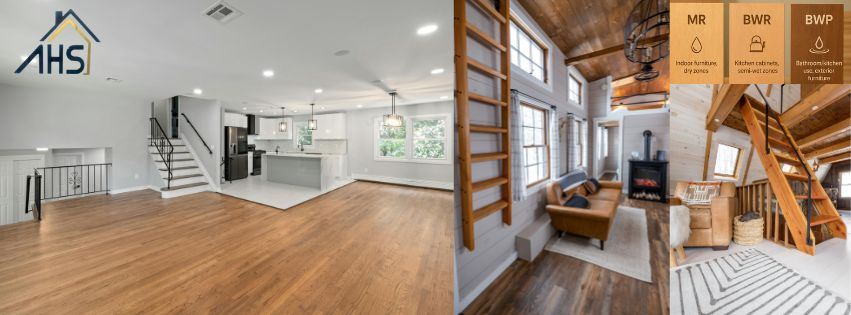
MR vs BWR vs BWP Plywood – Which Grade is Right for Your Project?
Choosing the right plywood grade is important because different plywood products are designed for different levels of moisture exposure and applications. MR, BWR and BWP plywood are commonly considered for furniture, kitchens, wardrobes, bathrooms and other interior projects, but they are not interchangeable in every situation.
If you are comparing MR vs BWR vs BWP plywood, the right choice depends on where the plywood will be installed, how much moisture it may encounter, and the performance requirements of your project.
This guide from Aggarwal Home Studio (AHS) explains the differences between MR, BWR and BWP plywood, their typical applications, adhesive systems, standards and practical buying considerations.
Quick Answer: MR vs BWR vs BWP Plywood
As a simple starting point:
- MR plywood: A practical option for relatively dry interior applications such as wardrobes, bedroom furniture and storage.
- BWR plywood: A suitable option for applications where greater moisture resistance is required, such as many kitchen and utility applications.
- BWP plywood: Generally selected where higher moisture resistance is required, such as wet-prone furniture and demanding interior applications.
However, the grade alone does not determine the complete quality of a plywood sheet. Core construction, veneer quality, bonding, applicable standards, manufacturing quality and installation practices also matter.
MR vs BWR vs BWP Plywood Comparison
| Feature | MR Plywood | BWR Plywood | BWP Plywood |
|---|---|---|---|
| Full Form | Moisture Resistant | Boiling Water Resistant | Boiling Water Proof |
| Typical Application | Dry interior applications | Moderate moisture exposure | Higher moisture exposure |
| Common Uses | Wardrobes, furniture and storage | Kitchens, utility areas and moisture-exposed furniture | Bathrooms, wet-prone areas and demanding applications |
| Moisture Resistance | Suitable for limited moisture exposure | Higher resistance than MR | Higher resistance to moisture exposure |
| Typical Adhesive System | Often UF-based | Moisture-resistant adhesive systems | Often phenolic resin-based |
| Typical Cost Position | Generally more economical | Mid-range option | Generally higher-cost option |
Note: Exact adhesive formulation, construction and performance can vary between manufacturers and products. Always check the product datasheet and applicable standard before making a purchase.
What Does MR, BWR and BWP Mean?
MR Plywood – Moisture Resistant
MR plywood stands for Moisture Resistant plywood. It is generally intended for interior applications where the plywood is not exposed to prolonged or direct moisture.
MR plywood is commonly considered for:
- Bedroom wardrobes
- Bookshelves
- Storage cabinets
- Living-room furniture
- Interior partitions
- Other relatively dry furniture applications
MR plywood can be a cost-effective choice when the installation environment is relatively dry. It should not be selected simply because it is cheaper if the application involves frequent moisture, water splashes or high humidity.
BWR Plywood – Boiling Water Resistant
BWR plywood stands for Boiling Water Resistant plywood. It is intended to provide greater resistance to moisture than standard MR plywood and is commonly considered for areas where occasional moisture or splashing may occur.
Typical applications include:
- Kitchen cabinets
- Kitchen storage
- Utility-room furniture
- Furniture in moderately humid environments
- Interior applications with occasional moisture exposure
BWR can therefore be a practical middle-ground when MR does not provide enough moisture resistance for the application, while the highest moisture-resistance option is not necessarily required for every project.
BWP Plywood – Boiling Water Proof
BWP plywood stands for Boiling Water Proof plywood. It is generally selected for applications where higher resistance to moisture is required.
BWP plywood may be considered for:
- Bathroom furniture
- Sink-area cabinetry
- Wet-prone kitchen areas
- Utility areas
- Furniture exposed to higher humidity
- Other applications where higher moisture resistance is required
BWP is often associated with phenolic resin-based adhesive systems. However, adhesive type alone should not be used to judge the quality or compliance of a plywood product. Always verify the manufacturer’s product specification and applicable standard.
MR vs BWR vs BWP: Which Plywood Is Best for Your Application?
For Wardrobes
For wardrobes installed in relatively dry bedrooms or living areas, MR plywood can be a suitable option. If the room has higher humidity or the wardrobe is located in an environment with greater moisture exposure, BWR plywood may be worth considering.
The final choice should also take into account the room’s ventilation, wall condition, local humidity and installation quality.
For Kitchen Cabinets
BWR plywood is commonly considered for kitchen cabinetry because kitchens can experience humidity, steam and occasional water splashes.
For areas with greater moisture exposure, such as cabinetry around a sink or plumbing connection, a suitable BWP plywood product may be preferred.
However, plywood grade is only one part of kitchen durability. Proper edge sealing, laminate or finish quality, joint protection and installation also help protect the cabinet from moisture.
For Bathroom Furniture
Bathroom furniture is regularly exposed to humidity and moisture. A suitable BWP-grade plywood can therefore be considered where higher moisture resistance is required.
Even moisture-resistant plywood should be properly finished and installed. Exposed edges, joints and cut-outs should receive appropriate protection because water can enter through unprotected areas.
For Coastal and High-Humidity Locations
In coastal or highly humid locations, moisture exposure can be greater than in a typical dry interior. Depending on the application, a suitable BWR or BWP product may be considered.
For applications with demanding or prolonged moisture exposure, check the manufacturer’s specifications and applicable product standard rather than selecting plywood based only on its marketing name.
MR vs BWR vs BWP: How Adhesives Differ
The adhesive system used to bond plywood layers is an important part of its moisture performance.
- MR plywood: Often manufactured using urea-formaldehyde (UF)-based adhesive systems.
- BWR plywood: Uses an adhesive system intended to provide greater moisture resistance than standard MR products.
- BWP plywood: Commonly associated with phenolic resin-based adhesive systems designed for higher moisture resistance.
However, adhesive type alone does not determine plywood quality. A good-quality product also depends on veneer quality, core construction, bonding, manufacturing precision, applicable standards and quality control.
If adhesive type is important for your project, ask the supplier or manufacturer for the relevant product datasheet or technical documentation instead of relying only on verbal claims.
BWP vs Marine Plywood: Are They the Same?
BWP plywood and marine plywood should not automatically be treated as identical products. The terms may sometimes be used interchangeably in the market, but the applicable product standard is important.
For general-purpose plywood, buyers should check the applicable specification for the stated grade. Marine plywood is a separate product category with its own requirements and standard.
If a product is being sold as marine plywood, do not rely only on the word “marine” on the packaging. Check the applicable standard, product marking, manufacturer information and supporting documentation.
For projects that specifically require marine plywood, verify compliance with the relevant marine plywood specification rather than assuming that every BWP-labelled product is marine plywood.
Indian Standards and Certification: What Should You Check?
Indian Standards can help buyers understand the specification against which a plywood product is manufactured and tested.
IS 303:2024 is the current BIS standard for plywood for general purposes and covers relevant plywood grades, including MR, BWR and BWP.
IS 710:2024 is the BIS standard for marine plywood. If your project specifically requires marine plywood, verify that the product meets the relevant marine plywood specification.
When buying plywood, check:
- Product grade
- Applicable Indian Standard
- Manufacturer details
- Standard Mark or certification information, where applicable
- Product datasheet
- Batch or product identification
- Technical or test documentation where required
Do not assume that a product is high quality simply because it carries a particular marketing term. Verify the actual product specification and documentation.
How to Check MR, BWR or BWP Plywood Before Buying
Before purchasing plywood, inspect a sample and verify the product information.
1. Check the Product Marking
Look for clear information about the plywood grade, manufacturer and applicable standard. If certification is important for your project, ask for supporting documentation.
2. Inspect the Edge
Ask for a sample cut or inspect the sheet edge. Look for large core gaps, loose layers, poorly bonded plies, splits or signs of delamination.
3. Examine the Surface Veneer
The surface should be reasonably uniform and suitable for the intended finish. Excessive patches, cracks, open defects or poor repairs may indicate a lower-quality surface.
4. Ask About Adhesive and Construction
If adhesive type or moisture performance is important, ask the supplier for the product specification rather than relying only on verbal claims.
5. Compare the Datasheet
Check the manufacturer’s datasheet for grade, intended application, thickness, performance information and relevant standards.
6. Inspect Before Buying in Bulk
If you are purchasing plywood for an entire home or commercial project, inspect a representative sample before placing the full order.
Which Plywood Is Best for a Kitchen?
There is no single plywood grade that is automatically best for every part of a kitchen. The choice depends on moisture exposure.
| Kitchen Area | Possible Choice | Reason |
|---|---|---|
| Dry upper cabinets | MR or BWR | Depends on humidity and moisture exposure |
| General kitchen cabinets | BWR | Better suited to occasional moisture exposure |
| Sink cabinet | BWP | Greater moisture exposure |
| Wet/plumbing area | BWP or application-specific product | Higher exposure requires greater moisture protection |
| Dry pantry/storage | MR or BWR | Depends on environmental conditions |
Regardless of grade, protect exposed edges and joints and use appropriate finishing and installation methods.
Cost of MR vs BWR vs BWP Plywood
MR plywood is generally positioned as the more economical option for suitable dry interior applications. BWR usually costs more because it is designed for greater moisture resistance, while BWP is generally positioned at a higher price level for applications requiring higher moisture resistance.
However, plywood should not be selected on price alone.
Using MR plywood in an unsuitable moisture-prone environment may result in premature deterioration and replacement costs. Similarly, using BWP everywhere may increase the initial project cost without providing a meaningful benefit in dry areas.
The better approach is to compare initial cost, application, moisture exposure, expected performance, installation requirements and long-term value.
Common Mistakes When Choosing Plywood Grades
Choosing Plywood Only by Price
The cheapest plywood is not necessarily the most economical choice. Always compare grade, construction, quality, standards and intended application.
Using MR Plywood in Wet Areas
MR plywood is generally intended for relatively dry interior applications. Do not select it for regular or prolonged moisture exposure simply to reduce the initial cost.
Assuming BWP Means Marine Plywood
BWP and marine plywood are not automatically the same product. Check the applicable standard and product documentation, especially when a project specifically requires marine plywood.
Judging Quality Only by Adhesive
Phenolic resin or another adhesive type does not, by itself, prove that a plywood sheet is high quality. Core construction, veneer, bonding and compliance also matter.
Ignoring Edge Protection
Even moisture-resistant plywood can be vulnerable through exposed cut edges and joints. Proper sealing and finishing can help protect the plywood after installation.
MR vs BWR vs BWP: Which One Should You Choose?
| Your Requirement | Recommended Starting Point |
|---|---|
| Bedroom wardrobe | MR |
| Living-room furniture | MR |
| Humid interior environment | BWR |
| General kitchen cabinetry | BWR |
| Sink-area cabinet | BWP |
| Bathroom furniture | BWP |
| High-moisture application | BWP or application-specific product |
| Marine application | Marine plywood meeting the applicable specification |
Remember: These are practical starting points, not universal rules. The final selection should be based on the manufacturer’s specification and the actual conditions of use.
Need Help Choosing the Right Plywood Grade?
Choosing between MR vs BWR vs BWP plywood becomes easier when you first understand the environment in which the plywood will be used. Consider moisture exposure, application, core construction, product specifications, applicable standards and long-term requirements before making your decision.
Contact Aggarwal Home Studio (AHS) to discuss the right plywood grade for your project and request product samples, specifications or datasheets where available.
Aggarwal Home Studio is a home interior supplier in Pathankot, Punjab, offering premium laminates, veneers, plywood, architectural hardware and other interior materials for kitchens, wardrobes and complete home interiors. AHS combines product options with practical guidance to help homeowners, contractors and architects select materials suited to their project requirements.
FAQs
Which is better, MR or BWR plywood?
BWR is generally the more suitable choice when the plywood will experience greater moisture exposure. MR can be a practical and economical option for relatively dry interior applications such as wardrobes and furniture.
Is BWR plywood waterproof?
BWR plywood is designed for greater moisture resistance than MR plywood, but it should not automatically be considered completely waterproof under every condition. Performance depends on the product specification, construction, installation and exposure.
Which plywood is best for kitchen cabinets?
BWR plywood is commonly considered for general kitchen cabinetry because kitchens can experience humidity and occasional splashes. For areas with higher moisture exposure, such as sink cabinets, a suitable BWP product may be preferred.
Which plywood is best for bathroom furniture?
A suitable BWP-grade plywood is often preferred for bathroom furniture because bathrooms experience higher humidity and moisture. Proper edge sealing, finishing and installation are also important.
Is BWP plywood the same as marine plywood?
No. BWP and marine plywood should not automatically be treated as identical. Marine plywood is a separate product category with its own applicable specification. Always verify the standard and product documentation when marine plywood is specifically required.
Can MR plywood be used for wardrobes?
Yes. MR plywood can be suitable for wardrobes installed in relatively dry interior environments. If the location has higher humidity or moisture exposure, BWR may be a more suitable option.
Can MR plywood be used outdoors?
MR plywood is generally intended for interior applications and is not the preferred choice for outdoor or continuously exposed environments. For outdoor use, select a product specifically designed and rated for the required exposure conditions.
Which adhesive is used in BWP plywood?
BWP plywood is commonly associated with phenolic resin-based adhesive systems. However, adhesive type alone does not establish the complete quality or compliance of a plywood product, so the manufacturer’s specification and applicable standard should also be checked.
What determines plywood quality?
Plywood quality depends on several factors, including veneer quality, core construction, bonding, adhesive system, manufacturing precision, applicable standards and quality control. Always check the manufacturer’s datasheet and product documentation.
Does AHS provide different plywood grades?
Yes. Aggarwal Home Studio (AHS) offers plywood options for different applications and can help homeowners, contractors and architects select a suitable product based on project requirements, moisture exposure and finish.
Leave a Reply