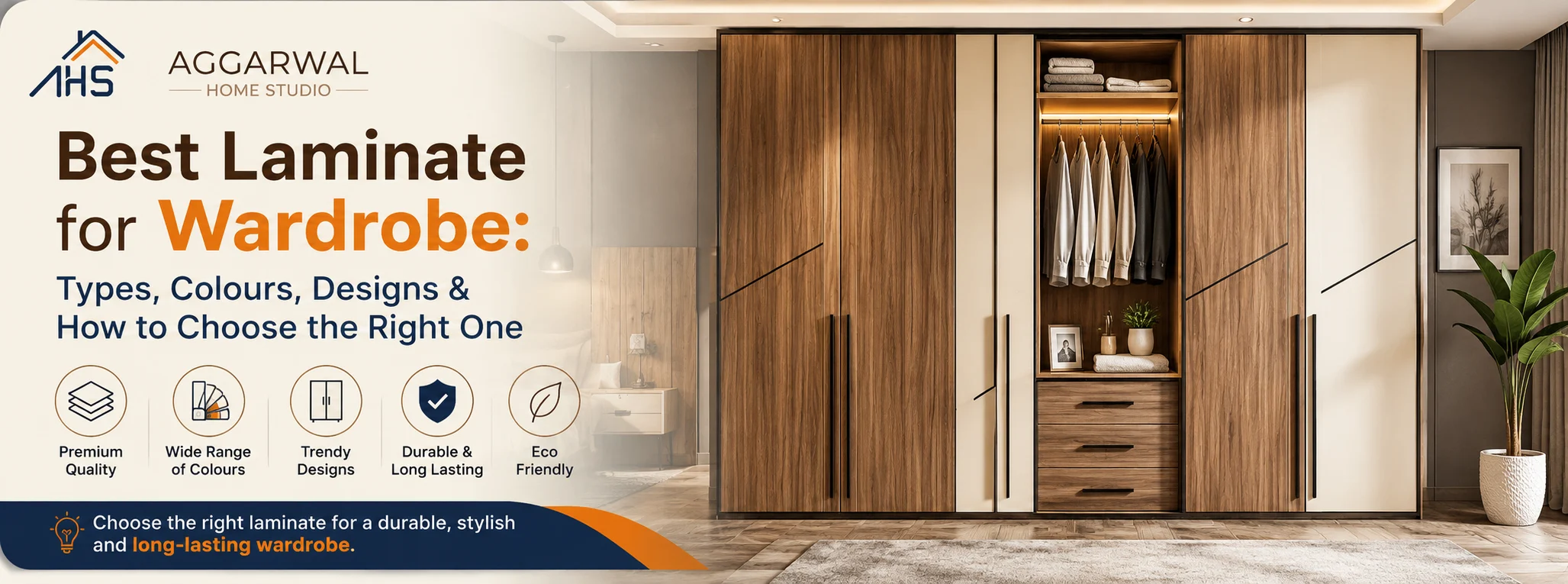
Best Laminate for Wardrobe: Types, Colours, Designs & How to Choose the Right One
A wardrobe is one of the biggest visible elements in a bedroom. That means the laminate you choose can change the entire character of the room.
A light wood finish can make a bedroom feel warm and natural. A soft matte colour can create a calm, modern look. A darker textured laminate can make the wardrobe feel more luxurious. But looks are only one part of the decision.
The better question is:
What is the best laminate for your wardrobe, your bedroom and your everyday use?
For most bedrooms, there isn’t one universally “best” laminate. The right choice depends on the wardrobe’s usage, room size, lighting, desired appearance, maintenance expectations and budget.
This guide explains the best laminates for wardrobe, different laminate types and finishes, colour ideas, wardrobe laminate designs, thickness considerations and the factors you should check before placing your order.
Quick Answer: Which Laminate Is Best for a Wardrobe?
For a frequently used bedroom wardrobe, a good-quality decorative HPL laminate is a practical starting point.
When comparing the best laminate for wardrobe doors, consider the surface finish, frequency of use, maintenance requirements and the overall bedroom design.
For the finish, matte, suede or subtle textured laminates are worth considering if you want a calm appearance and don’t want every fingerprint to become part of the design.
If you prefer warmth, choose a wood-finish laminate.
If you want a sleek, contemporary appearance, glossy laminate can work well.
For a small bedroom, lighter colours such as warm white, beige, greige or light wood can make the wardrobe feel visually lighter.
The important thing is to choose the laminate as part of the complete wardrobe—not as an isolated sheet. The substrate, bonding, edge treatment, hardware and workmanship also influence the finished result.
Why Laminate Is So Popular for Wardrobes
A wardrobe has a different requirement from a decorative wall panel.
Its doors are opened repeatedly. Hands touch the shutters every day. Shelves carry clothes and accessories. Edges are exposed to regular handling.
At the same time, the wardrobe has to look good because it occupies a significant amount of wall space.
Laminate works well for this combination because it offers:
- A wide range of colours and patterns
- Different surface finishes
- Wood and stone-inspired designs
- Easy everyday cleaning
- Options across different price points
- A consistent appearance across multiple shutters
- Design flexibility for hinged and sliding wardrobes
That is why laminate remains a common surface choice for bedroom wardrobes in India.
But choosing laminate shouldn’t start with the question, “Which design looks the best?”
Start with how you use the wardrobe.
What Are the Different Types of Laminates for Wardrobe?
The word “laminate” covers several different surface appearances and product categories. For a homeowner, the most useful way to compare them is by finish, appearance and application.
For a broader comparison of laminate categories, see Types of Laminates for Wardrobe: Complete Guide to Finishes, Designs & Uses.
1. Matte Laminate for Wardrobe
Matte laminates have little or no visible reflection.
They are a natural fit for bedrooms because the surface feels visually quiet rather than overly shiny.
A matte laminate can work particularly well when you want:
- A contemporary bedroom
- A minimalist wardrobe
- A soft, understated appearance
- Less emphasis on reflections
- A finish that doesn’t make the wardrobe look overly decorative
Warm beige, muted grey, cream, olive-inspired shades and soft neutrals can all work beautifully in matte.
Best for:
Modern + minimalist + calm bedrooms
2. Glossy Laminate for Wardrobe
Glossy laminates have a reflective surface that catches light.
This can make a wardrobe look sleek and polished, particularly when combined with modern furniture and good lighting.
However, there’s a trade-off.
A glossy surface can make fingerprints, smudges and dust more noticeable, especially on darker colours.
So glossy isn’t automatically better or worse than matte.
It’s simply a different design choice.
Best for:
Contemporary + sleek + statement bedrooms
3. Wood-Finish Laminate
If you want your wardrobe to have the warmth of wood without using natural wood veneer, wood-finish laminate is one of the easiest options to consider.
Oak, walnut, teak-inspired and other woodgrain patterns can create very different moods.
Light wood
Creates a brighter and more relaxed appearance.
Medium wood
A versatile choice that works with many bedroom palettes.
Dark wood
Adds depth and can create a richer, more traditional or luxurious appearance.
Woodgrain remains a popular wardrobe direction because it can work with both contemporary and classic interiors.
4. Textured Laminate
A textured laminate adds another dimension to the wardrobe.
Instead of simply changing the colour, the surface can imitate the visual character of wood, fabric, stone or other materials.
Texture can be particularly useful when you want a wardrobe that looks interesting without using a loud pattern.
Best for:
Premium, contemporary and nature-inspired bedrooms
5. Solid-Colour Laminate
Sometimes the best wardrobe design is the simplest one.
A solid colour creates a clean visual surface and works especially well with large wardrobes.
For example:
- Warm white
- Ivory
- Beige
- Greige
- Light grey
- Charcoal
- Olive
- Deep brown
Solid colours also make it easier to combine the wardrobe with other elements in the room.
6. Decorative or Patterned Laminate
If your bedroom is relatively simple, a patterned laminate can become the wardrobe’s focal point.
But be careful with large patterns.
A design that looks attractive on a small sample may become visually overwhelming when repeated across six or eight large shutters.
For large wardrobes, subtle patterns are generally easier to live with.
Matte vs Glossy Laminate for Wardrobe
This is one of the most common questions homeowners ask.
The answer depends on your priorities.
| Feature | Matte | Glossy |
|---|---|---|
| Overall appearance | Soft and understated | Sleek and reflective |
| Fingerprints | Generally less noticeable | More noticeable |
| Reflection | Low | High |
| Modern look | Excellent | Excellent |
| Cleaning visibility | More forgiving | Marks can stand out |
| Small-room effect | Calm and controlled | Can reflect light |
| Best use | Everyday practical wardrobes | Contemporary statement designs |
For a detailed comparison, see Matte vs Glossy Laminate for Wardrobe: Which One Is Better?
So which one should you choose?
If you want a wardrobe that quietly blends into the bedroom, matte is a strong choice.
If you want the wardrobe to catch attention and reflect light, glossy can be the better option.
There is also a third approach:
Use both.
For example, use matte laminate on most shutters and a glossy accent on one or two panels.
Best Laminate Colours for Bedroom Wardrobe
Colour should be selected according to the bedroom rather than in isolation.
Before finalising a laminate, look at:
- Wall colour
- Flooring
- Bed and bedside tables
- Curtains
- Natural light
- Artificial lighting
- Size of the bedroom
For more colour ideas, see Best Laminate Colours for Bedroom Wardrobe: Modern & Timeless Ideas.
Warm White
A safe option for minimalist bedrooms.
It creates a clean appearance and can help a compact room feel visually open.
Beige
Beige is warmer than white and works well with wooden furniture and warm lighting.
Greige
Greige sits between grey and beige.
It’s useful when you want a modern neutral without making the room feel too cold.
Light Grey
A good choice for contemporary bedrooms.
Pair it with wood tones if you want to soften the overall look.
Walnut
Walnut-inspired laminate can make the wardrobe feel warm and premium.
It works particularly well when the rest of the room already includes wooden elements.
Oak
Light oak is a useful choice when you want a natural, airy appearance.
Charcoal
Charcoal can create a dramatic wardrobe, but it works best when the bedroom has enough visual balance.
A dark wardrobe against dark walls can make a small bedroom feel heavy.
Modern Wardrobe Laminate Colour Combinations
One colour isn’t your only option.
A two-colour wardrobe can create depth without requiring an elaborate design.
For more combination ideas, see Two-Colour Wardrobe Laminate Combinations: Modern Ideas for Bedrooms.
White + Light Oak
Fresh, simple and suitable for contemporary bedrooms.
Beige + Walnut
Warm and sophisticated.
Greige + Oak
A good combination for a modern neutral interior.
Cream + Dark Wood
Creates contrast while retaining warmth.
Charcoal + Walnut
A stronger, premium-looking combination for larger rooms.
Olive + Natural Wood
Suitable for homeowners who want a softer, nature-inspired palette.
These combinations are also among the more versatile modern wardrobe laminate designs for contemporary bedrooms.
The simplest rule is:
If one laminate has a strong grain or pattern, pair it with a quieter solid colour.
That keeps the wardrobe from looking unnecessarily busy.
How to Choose the Best Laminate for Your Wardrobe
Instead of choosing based only on a catalogue photograph, use this five-step approach.
Step 1: Start With the Bedroom
Ask yourself whether you want the wardrobe to:
Blend in with the wall
or
Stand out as a design feature.
For a seamless appearance, choose a colour close to the wall or surrounding furniture.
For a statement wardrobe, choose contrast.
Step 2: Consider the Size of the Wardrobe
A small two-door wardrobe gives you more freedom to experiment with strong colours.
A full-wall wardrobe is different.
Because the surface area is large, even a subtle colour can become dominant.
For large wardrobes, neutral colours, woodgrain and restrained textures are generally easier to balance with the rest of the room.
Step 3: Think About Touch and Usage
If the wardrobe is opened dozens of times a week, don’t choose a surface purely because it looks impressive in a photograph.
Think about fingerprints, dust and cleaning.
This is one reason matte and subtle textured finishes are attractive for frequently handled shutters.
If scratch resistance is an important consideration, ask the supplier whether the selected laminate is suitable for your expected level of everyday wardrobe use and handling.
Step 4: Look at Natural Light
A laminate can look different in a showroom compared with your bedroom.
A cool grey under white showroom lights may appear much warmer under yellow bedroom lighting.
Always try to see a physical sample in the actual room if possible.
Step 5: Consider the Complete Construction
The laminate is only the surface.
The final wardrobe also depends on:
- Plywood/MDF or other substrate
- Laminate specification
- Adhesive
- Edge treatment
- Hinges or sliding hardware
- Shutter construction
- Installation
A beautiful laminate on poorly constructed shutters is still a poor wardrobe.
What Laminate Thickness Is Suitable for a Wardrobe?
Laminate thickness should be considered according to where the sheet is being used and the manufacturer’s specifications.
You will commonly encounter 0.8 mm and 1 mm decorative laminates in wardrobe discussions and product ranges.
For a detailed comparison, see 0.8 mm vs 1 mm Laminate for Wardrobe: Which Thickness Is Better?
For example, current manufacturer guidance often positions thicker laminate for visible, frequently handled surfaces and thinner options for less visible interior applications. But this isn’t a universal rule that every wardrobe must follow.
So don’t ask only:
“Is 1 mm better?”
Ask:
“What thickness and specification is appropriate for this particular shutter, substrate and application?”
That is a much better way to compare products.
Laminate for Wardrobe: Exterior vs Interior
The wardrobe interior doesn’t necessarily need the same decorative treatment as the outside.
For the exterior, you may prioritise:
- Colour
- Texture
- Design
- Finish
- Fingerprint visibility
For the interior, practicality usually becomes more important.
A neutral, easy-to-clean surface can make more sense than an expensive decorative pattern that will mostly remain hidden behind clothes.
This is also an opportunity to control the project budget intelligently.
Best Laminate for Small Bedroom Wardrobe
Small bedrooms require a slightly different approach.
The wardrobe already occupies a significant amount of visual space, so very dark or complicated finishes can make the room feel heavier.
Consider:
- Warm white
- Cream
- Beige
- Light grey
- Greige
- Light oak
- Subtle woodgrain
If you want contrast, use it selectively.
For example:
Light beige wardrobe + one walnut accent panel
can create more character than using dark walnut across the entire wardrobe.
Best Laminate for Master Bedroom Wardrobe
A master bedroom gives you more freedom because the wardrobe is often part of a larger interior scheme.
Good options include:
- Walnut woodgrain
- Oak + beige
- Greige + wood
- Charcoal + walnut
- Soft neutral matte
- Premium textured laminate
For a premium look, the trick isn’t necessarily using the most expensive-looking laminate.
Consistency is more important.
The wardrobe, bed, flooring, lighting and wall colours should feel like they belong to the same room.
Best Laminate for Sliding Wardrobe
Sliding wardrobes have large, uninterrupted shutter surfaces.
That changes how laminate looks.
A busy pattern repeated across a large sliding door can become overwhelming.
For sliding wardrobes, consider:
- Large-scale woodgrain
- Plain matte colours
- Two-tone layouts
- Subtle textures
- Vertical or horizontal grain direction
If the wardrobe is very wide, breaking the visual surface into two complementary finishes can make it more interesting.
For current design inspiration, see Latest Wardrobe Laminate Designs 2026: Modern Ideas for Bedrooms.
Is Laminate Waterproof for Wardrobes?
This is where homeowners need to be careful.
A laminate surface can offer useful resistance to everyday moisture depending on its specification, but that does not mean the entire wardrobe is waterproof.
Homeowners looking for a waterproof laminate for wardrobe should also consider the construction and moisture protection of the complete wardrobe.
Water can still reach the underlying board through:
- Unsealed edges
- Joints
- Damaged surfaces
- Poor installation
- Prolonged exposure
So if moisture is a concern, don’t just ask for a “waterproof laminate.”
Ask about the complete wardrobe construction and moisture protection.
Is Laminate Better Than Veneer for a Wardrobe?
Neither is automatically better.
They give you different priorities.
Laminate
Better suited if you want:
- More design options
- Easy everyday maintenance
- Consistent patterns
- Practical pricing
- A wide choice of finishes
Veneer
Worth considering if you specifically want:
- A natural wood appearance
- The character of real wood grain
- A more natural material aesthetic
The right choice depends on the look, maintenance and budget you want.
A separate Laminate vs Veneer for Wardrobe: Which One Is Better? comparison is useful because the two materials are often compared based on very different expectations.
Laminate vs Acrylic for Wardrobe
Acrylic is another popular wardrobe finish, particularly for modern interiors.
But don’t choose between laminate and acrylic simply by asking which material is “premium.”
Compare:
- Appearance
- Fingerprint visibility
- Scratch behaviour
- Repairability
- Cleaning
- Cost
- Available colours
- Overall bedroom design
For a detailed comparison, see Laminate vs Acrylic for Wardrobe: Which One Is Better?
For many homeowners, laminate offers enough design flexibility without needing a more specialised finish.
How to Maintain a Laminate Wardrobe
A wardrobe doesn’t need complicated maintenance.
For normal cleaning:
- Remove dust with a soft cloth.
- Wipe marks with a suitable damp cloth.
- Avoid abrasive materials.
- Don’t leave water sitting around edges or joints.
- Follow the cleaning instructions supplied with the specific laminate.
For a detailed care guide, see How to Clean and Maintain a Laminate Wardrobe: Easy Care Guide.
If the wardrobe has a special coating or speciality finish, follow the manufacturer’s care instructions rather than assuming every laminate should be cleaned in exactly the same way.
Mistakes to Avoid When Choosing Wardrobe Laminate
1. Choosing From a Tiny Sample Alone
A colour can look very different when repeated over several square metres.
2. Copying a Pinterest or Instagram Bedroom Exactly
The design may have completely different lighting, room dimensions and flooring.
Take inspiration from the image—but adapt it to your room.
3. Selecting Colour Before Finish
Two laminates of the same colour can look completely different in matte and gloss.
Choose the colour + finish together.
4. Ignoring the Edges
A good-looking shutter can still appear unfinished if the edges aren’t properly detailed.
5. Using Too Many Patterns
A wardrobe is already a large design element.
One woodgrain + one solid colour is often enough.
6. Looking Only at the Laminate Price
A cheaper sheet doesn’t necessarily mean a cheaper finished wardrobe.
Consider the entire specification.
7. Assuming “Premium” Means “Best”
A premium finish that constantly shows fingerprints may be less suitable for your lifestyle than a simpler matte laminate.
A Simple Wardrobe Laminate Selection Formula
If you’re overwhelmed by choices, use this formula:
Bedroom size → Lighting → Usage → Style → Colour → Finish → Budget
For example:
Small + low light + frequent use
Choose:
Light neutral + matte finish
Large + bright + luxury interior
Choose:
Walnut/charcoal + textured or matte finish
Modern + minimalist
Choose:
Greige/white + matte
Warm + natural
Choose:
Oak/walnut + subtle texture
Statement wardrobe
Choose:
Solid colour + accent wood/gloss panel
This approach is much more reliable than simply searching for the “latest wardrobe laminate design.”
What to Check Before Buying a Laminate Sheet for Wardrobe
Before approving a laminate, ask your supplier or interior professional:
- What is the exact laminate specification?
- What thickness is being proposed?
- Is it intended for exterior shutters or interior use?
- What substrate will it be bonded to?
- How will the edges be finished?
- What adhesive is being used?
- Is the finish suitable for frequent handling?
- How should the surface be cleaned?
- Can I see a physical sample?
- What is included in the quoted price?
These questions can help you make a more informed decision than simply comparing catalogue designs.
Best Wardrobe Laminate: Our Practical Picks
Best all-round choice
Matte or subtle textured HPL
A practical choice for a frequently used bedroom wardrobe.
Best for a natural look
Oak or walnut wood-finish laminate
Good when warmth is more important than a highly contemporary appearance.
Best for minimalist bedrooms
Warm white, beige or greige matte laminate
Keeps the wardrobe visually simple.
Best for a luxury appearance
Dark wood + muted solid colour
Creates contrast without making the entire wardrobe visually heavy.
Best for a small bedroom
Light neutral + light wood
Keeps the wardrobe from dominating the room.
Best for a statement design
Gloss or speciality finish used selectively
Use it as an accent rather than automatically covering every shutter.
Frequently Asked Questions
Which laminate is best for wardrobe?
For most frequently used wardrobes, a good-quality decorative HPL with a suitable matte, textured or woodgrain finish is a practical option. The best choice ultimately depends on the room, usage and desired appearance.
Which laminate is best for a bedroom wardrobe?
Matte, subtle textured and wood-finish laminates are versatile choices for bedrooms. Light neutrals work well in smaller rooms, while wood and darker finishes can add warmth and depth to larger bedrooms.
What are the different types of laminates for wardrobe?
Common wardrobe options include matte, glossy, woodgrain, textured, solid-colour, patterned and speciality decorative laminates. The terminology can vary between manufacturers, so check the product specification rather than relying on the finish name alone.
Is matte laminate better than glossy for wardrobe?
Not universally. Matte is usually a good choice if you want a soft appearance and less visible handling marks. Glossy is better if you prefer a reflective, sleek appearance.
Which laminate colour is best for wardrobe?
There is no single best colour. Warm white, beige, greige and light wood are versatile choices, while walnut, charcoal and darker wood tones work well when you want more depth.
Is 1 mm laminate good for wardrobe?
1 mm laminate is commonly available for wardrobe applications and is often used for visible shutters. However, thickness should be selected according to the product specification, substrate and application rather than treated as a universal rule.
Is laminate good for bedroom wardrobes?
Yes. Laminate is a practical wardrobe surface because it offers a broad range of designs and finishes while being relatively easy to maintain.
Can laminate be used for sliding wardrobes?
Yes. Laminate can be used for sliding wardrobe shutters when the panel construction and laminate specification are appropriate for the application.
Is laminate waterproof?
The laminate surface and the complete wardrobe are not the same thing. A laminate may have moisture-resistant properties, but edges, joints and the substrate still need appropriate protection.
How do I choose laminate for my wardrobe?
Start with the bedroom size, lighting and wardrobe usage. Then choose the style, colour and finish. Finally, compare the complete material specification, including substrate, thickness, edge treatment and installation.
Final Verdict
The best laminate for a wardrobe isn’t necessarily the most expensive sheet, the darkest colour or the latest design.
It is the laminate that looks right in your bedroom, performs well under your daily usage and doesn’t become difficult to maintain.
For a safe starting point, consider:
Matte + neutral for a modern practical bedroom.
Woodgrain + warm tones for a natural bedroom.
Gloss + selective accents for a contemporary statement.
Light colours + subtle texture for a smaller room.
And before you finalise anything, remember one important thing:
A wardrobe is a complete system, not just a laminate sheet.
The substrate, construction, adhesive, edges, hardware and installation all contribute to how the finished wardrobe performs.
Choose the laminate with the whole wardrobe in mind, and you’re far more likely to be happy with the result several years from now.
About Aggarwal Home Studio
Aggarwal Home Studio is a trusted supplier of premium plywood, laminates, veneers, MDF boards, HDHMR boards, architectural hardware, acrylic sheets, flush doors, louvers, UV sheets, and modular kitchen materials. If you are planning a new bedroom wardrobe, you can explore a wide range of interior materials and compare options based on design, finish, application and budget.
From choosing the right laminate colour and finish to selecting suitable plywood, MDF or HDHMR boards for the wardrobe structure, the right combination of materials can make a significant difference to the final result. Aggarwal Home Studio caters to homeowners, interior designers, architects, contractors and other professionals working on residential and commercial interior projects.
For wardrobe projects, you can explore different laminate designs, colours and finishes and select materials that complement your bedroom’s overall interior style and practical requirements.
Looking for Wardrobe Materials?
If you are planning a new wardrobe or bedroom interior, explore the range of laminates and other interior materials available at Aggarwal Home Studio and choose products according to your design and project requirements.
Contact Aggarwal Home Studio today to discuss your requirements.
Leave a Reply